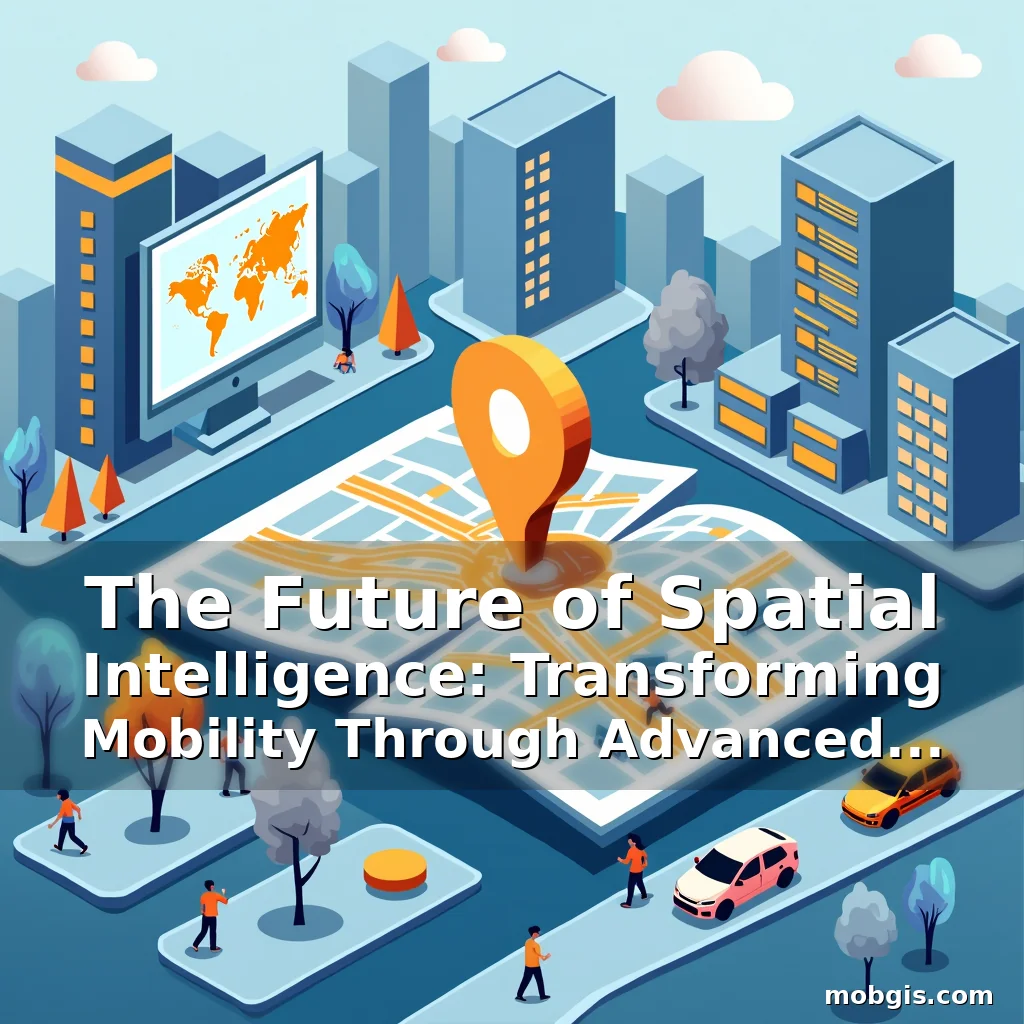
The Future of Spatial Intelligence: Transforming Mobility Through Advanced Mapping Solutions
In an era where location data drives innovation across industries, mapping solutions have emerged as critical tools that redefine how we navigate, analyze, and interact with our physical world. From urban planners leveraging geospatial analytics to logistics companies optimizing delivery routes, the impact of these technologies is far-reaching.
At the heart of this transformation lies MobGIS—a dynamic intersection of mobility and geographic information systems—offering powerful platforms that enable real-time spatial decision-making. This article explores the evolution, applications, and future potential of mapping solutions tailored specifically for the MobGIS community and beyond.
The Evolution of Mapping Technologies
Mapping has come a long way from hand-drawn topographic charts to highly sophisticated digital representations powered by artificial intelligence and satellite imagery. Today’s mapping solutions integrate vast amounts of data from diverse sources such as GPS devices, IoT sensors, and crowd-sourced inputs.
This technological leap allows for continuous updates and precision at unprecedented levels. For instance, map providers now offer street-level views updated hourly using machine learning algorithms trained on millions of user-generated images and vehicle telemetry.
- Data Fusion: Combining disparate datasets enhances accuracy while reducing errors caused by singular data sources.
- Real-Time Updates: Live traffic conditions and road closures can be reflected instantly within maps through connected sensor networks.
These advancements are particularly vital for MobGIS professionals who rely on accurate, up-to-date spatial data to develop mobile-first applications that respond dynamically to changing environments.
Core Components of Modern Mapping Platforms
A robust mapping solution consists of several interconnected components working together seamlessly to provide users with rich geographical insights. These include high-resolution basemap layers, interactive APIs, and advanced geolocation services capable of pinpointing locations down to sub-meter precision.
Beyond basic navigation features, modern platforms support complex operations such as route optimization based on historical traffic patterns and predictive modeling of congestion hotspots. They also incorporate augmented reality elements to overlay contextual information onto real-world scenes via smartphone cameras.
Satellite Imagery Integration
Satellite imagery remains one of the most crucial assets in contemporary mapping ecosystems. High-resolution optical satellites capture detailed surface textures, while synthetic aperture radar (SAR) provides all-weather imaging capabilities essential during natural disasters or military reconnaissance missions.
For example, Maxar Technologies’ WorldView constellation delivers 30 cm resolution imagery suitable for identifying individual vehicles or even small structures from space. Such clarity enables emergency responders to assess damage assessments quickly after events like earthquakes or wildfires.
Applications Across Industries
Mobility-focused mapping solutions find their place in numerous sectors, each utilizing them differently according to unique needs. Urban transportation authorities employ these tools to manage public transit schedules efficiently while improving accessibility for disabled commuters through optimized stop placements.
Logistics firms benefit immensely too; they utilize geoanalytics to determine optimal warehouse locations minimizing transport costs without compromising service quality. Real estate agents leverage heatmaps showing property values influenced by proximity to schools or parks.
Retailers use footfall analysis derived from anonymized Bluetooth beacon signals inside shopping centers to understand consumer behavior better than traditional surveys ever could. Healthcare institutions apply similar techniques to allocate resources strategically based on patient density forecasts.
Challenges Faced by Developers & Users
Despite remarkable progress, developing effective mapping solutions presents significant hurdles ranging from technical limitations to ethical concerns regarding privacy violations. One major challenge involves ensuring consistent performance across varying network conditions which affects reliability especially when used outdoors away from Wi-Fi coverage areas.
Data security represents another pressing issue since sensitive location records might expose personal habits revealing everything from daily routines to political affiliations. Proper encryption protocols combined with strict access controls become imperative under such circumstances.
Additionally, there exists considerable debate over whether current regulations adequately protect individuals against misuse of aggregated movement profiles generated by apps collecting background location data continuously unless explicitly turned off by users themselves.
Emerging Trends Shaping Tomorrow’s Maps
As technology continues advancing rapidly, new trends are beginning to shape what tomorrow’s mapping experiences will look like. Augmented Reality (AR) overlays promise immersive interfaces allowing users to visualize buildings before construction starts merely by pointing smartphones toward empty lots.
Voice-command enabled navigation systems integrated deeply into smart speakers and wearables present exciting possibilities too—for elderly populations experiencing difficulties reading screens due to declining eyesight but still needing assistance finding nearby pharmacies or grocery stores easily.
Moreover, blockchain-based verification mechanisms aim to enhance trustworthiness around ownership claims concerning land parcels recorded digitally instead of relying solely upon paper deeds susceptible to forgery attempts.
Educational Resources & Community Engagement
To foster growth among enthusiasts eager to explore deeper aspects related to MobGIS topics, various educational initiatives exist globally offering both formal courses alongside informal workshops focused entirely on practical implementation skills required today’s developers.
Online platforms host communities where practitioners share code snippets demonstrating creative uses cases involving Python libraries like GeoPandas or JavaScript frameworks such as Leaflet.js commonly utilized within web development circles dealing frequently with GIS challenges.
Conferences dedicated exclusively towards discussing latest research breakthroughs complement these efforts significantly contributing towards building stronger professional networks beneficial for career advancement opportunities available locally and internationally alike.
Conclusion
The landscape surrounding mapping solutions keeps evolving constantly driven largely by demand stemming out necessity rather than mere convenience alone. As reliance grows heavier upon accurate spatial knowledge informing decisions affecting billions worldwide everyday,
Investment into refining existing methodologies coupled with embracing emerging innovations becomes non-negotiable factor determining success rate achieved within competitive markets characterized increasingly by rapid change cycles occurring regularly every few months nowdays.

news is a contributor at MobGIS. We are committed to providing well-researched, accurate, and valuable content to our readers.