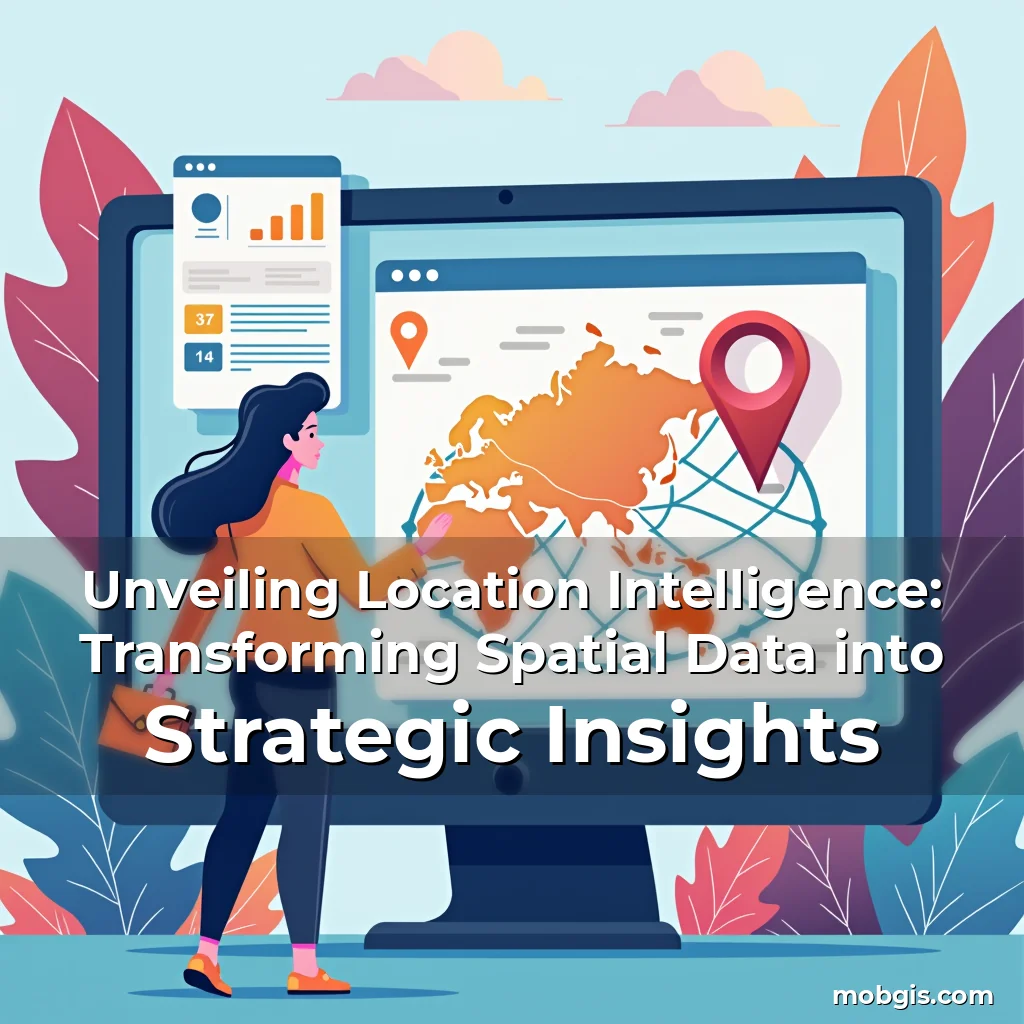
Unveiling Location Intelligence: Transforming Spatial Data into Strategic Insights
In an era defined by mobility and digital connectivity, location intelligence has emerged as a cornerstone of decision-making across industries. By leveraging geospatial data, organizations unlock powerful insights that drive efficiency, innovation, and competitive advantage.
This guide explores the transformative role of location intelligence, focusing on its applications, challenges, and future trajectory for developers, analysts, and leaders in the MobGIS ecosystem.
The Evolution of Location Intelligence
Location intelligence traces its roots to ancient cartography and celestial navigation, but modern advancements have revolutionized its scope and impact. Today, it combines geographic data with advanced analytics to reveal patterns, relationships, and trends invisible through traditional methods.
The rise of smartphones, IoT sensors, and satellite imaging has created unprecedented access to real-time spatial data. From tracking delivery vehicles to predicting natural disasters, the possibilities are vast and ever-expanding.
- Data Sources: GPS, RFID, social media check-ins, and crowdsourced mapping contribute to dynamic datasets.
- Analytical Tools: Machine learning models and GIS platforms enable predictive and prescriptive analysis.
Core Components of Location Intelligence
A robust location intelligence system relies on four pillars: data acquisition, processing, analysis, and visualization. Each stage demands specialized expertise and cutting-edge technology to extract actionable insights.
For instance, raw geospatial data often requires cleaning and normalization before it can be analyzed. Advanced algorithms then identify correlations between locations and events, such as correlating traffic patterns with weather conditions.
Data Acquisition Challenges
Collecting accurate and timely spatial data remains a significant hurdle. Inconsistent sensor calibration, incomplete address databases, and geopolitical restrictions complicate global projects. A study by Esri found that 68% of enterprises struggle with data quality in their location initiatives.
To mitigate these risks, many organizations invest in hybrid data strategies that combine proprietary collections with third-party APIs. Real-time validation tools also help maintain consistency across diverse datasets.
Industries Transformed by Location Intelligence
No sector is immune to the power of location intelligence. Retailers optimize store placements based on foot traffic heatmaps, while city planners simulate infrastructure changes using virtual modeling. Even healthcare providers leverage geospatial analytics to allocate emergency services efficiently.
In agriculture, farmers use soil moisture maps and crop yield predictions to maximize productivity. Meanwhile, ride-sharing companies dynamically adjust pricing models based on supply-demand imbalances detected through spatial clustering algorithms.
Applications in Mobility and Transportation
Mobility-focused industries benefit immensely from location intelligence. Fleet management systems track vehicle positions in real time, reducing fuel costs and improving route optimization. Public transit agencies analyze passenger density patterns to adjust schedules and capacities.
Autonomous vehicle development represents another frontier. Self-driving cars rely heavily on LiDAR scanning, map-matching algorithms, and real-time traffic data to navigate safely and efficiently. Location intelligence enables these systems to anticipate road closures, construction zones, and pedestrian activity.
Smart Cities and Urban Planning
Urban centers worldwide are integrating location intelligence into smart city frameworks. Sensors embedded in roads and buildings monitor air quality, noise levels, and energy consumption. Planners use this data to design walkable neighborhoods, reduce congestion, and enhance disaster preparedness.
For example, Barcelona employs a centralized geospatial platform to coordinate waste collection, parking enforcement, and emergency response teams. Such integrations create seamless, responsive environments that adapt to citizen needs in real time.
Ethical Considerations and Privacy Concerns
As location data becomes ubiquitous, ethical dilemmas surrounding surveillance, consent, and bias demand careful attention. Consumers increasingly question how their movement trails are stored, shared, and monetized by corporations and governments.
Regulations like GDPR and CCPA impose stringent requirements on handling personal location data. Compliance involves implementing encryption protocols, anonymization techniques, and transparent opt-in mechanisms for users.
Technical Foundations of Location Intelligence Systems
Beneath the surface, location intelligence relies on sophisticated computational architectures. Distributed computing frameworks handle massive geospatial datasets, while graph databases model complex spatial relationships between entities.
Cloud-native solutions offer scalability advantages, allowing organizations to process petabytes of data without upfront hardware investments. Edge computing further enhances performance by performing initial analyses closer to data sources rather than central servers.
Machine Learning in Geospatial Analysis
Artificial intelligence accelerates pattern recognition in location intelligence workflows. Neural networks trained on historical geospatial data predict future outcomes, such as identifying areas prone to flooding or forecasting crime hotspots.
Transfer learning techniques enable models developed for one region to generalize across different geographical contexts, significantly reducing training times and resource allocation.
Future Trends Shaping Location Intelligence
The next decade promises groundbreaking innovations in location intelligence. Quantum computing may solve previously intractable geospatial optimization problems, while augmented reality interfaces provide immersive spatial visualizations.
Satellite constellations like Starlink will democratize access to high-resolution Earth observation data, empowering smaller organizations and developing regions. Blockchain technology could introduce immutable audit trails for critical geospatial transactions.
Building a Career in Location Intelligence
Professionals seeking careers in this field require a blend of technical skills and domain-specific knowledge. Proficiency in programming languages like Python or JavaScript, coupled with expertise in GIS software, forms a strong foundation.
Certifications from institutions like GeoAcademy or Esri University validate competencies in geospatial analysis. Networking through conferences such as FOSS4G and participation in open-source projects further accelerate career growth.
Conclusion
Location intelligence continues to redefine how we interact with our physical world, offering profound opportunities for innovation and problem-solving. Its influence spans from individual convenience apps to global climate change monitoring efforts.
By embracing emerging technologies responsibly and addressing ethical concerns proactively, stakeholders can harness location intelligence to build smarter, safer, and more sustainable futures for all communities.

news is a contributor at MobGIS. We are committed to providing well-researched, accurate, and valuable content to our readers.