Integration With GIS Technologies
Modern GIS systems act as the bridge between raw remote sensing data and actionable insights. Platforms like QGIS, ArcGIS Pro, and GRASS GIS incorporate tools for processing, visualizing, and analyzing multi-source geospatial data.
MobGIS developers benefit immensely from APIs provided by companies such as Maxar, Planet Labs, and ESA (European Space Agency). These interfaces allow seamless access to high-resolution satellite imagery, elevation models, and historical datasets for mobile mapping applications.
Cloud-native GIS platforms like Amazon Web Services (AWS) Ground Station and Google Earth Engine enable scalable processing of massive remote sensing datasets. Machine learning algorithms trained on these repositories automate tasks like feature extraction, anomaly detection, and predictive modeling.
Interoperability standards such as GeoTIFF, NetCDF, and OGC (Open Geospatial Consortium) protocols ensure compatibility between diverse data formats and software ecosystems. This standardization simplifies workflows for professionals integrating remote sensing into enterprise GIS solutions.
Challenges and Limitations
Despite its advantages, remote sensing faces hurdles that limit its effectiveness. Atmospheric interference, cloud cover, and sensor calibration errors can distort data accuracy. Additionally, the cost of acquiring and processing high-resolution imagery remains prohibitive for many organizations.
Data interpretation requires domain expertise; misclassification risks arise when distinguishing similar surface features based solely on spectral characteristics. For example, differentiating between snow-covered forests and barren landscapes demands contextual knowledge and ancillary data inputs.
Privacy concerns emerge as higher-resolution imagery enables identification of individuals or sensitive locations. Ethical frameworks governing data usage become critical, particularly in regions with strict regulations regarding surveillance and territorial sovereignty.
Lastly, the sheer volume of available data overwhelms analysts without robust computational resources. Efficient storage, retrieval, and visualization techniques are essential to manage petabytes of geospatial information effectively.
Future Trends and Innovations
Emerging technologies promise to overcome current limitations and expand remote sensing’s potential. Hyperspectral imaging with hundreds of narrow bandwidths enhances material discrimination, while quantum remote sensing explores new frontiers in detecting minute environmental changes.
Miniaturized CubeSat constellations offer frequent revisit times and reduced costs compared to traditional satellites. Companies like SpaceX and Planet Labs deploy thousands of microsatellites to provide near-real-time global coverage, ideal for monitoring rapidly evolving events.
Artificial intelligence and deep learning networks are transforming image classification, object detection, and pattern recognition. CNNs (Convolutional Neural Networks) excel at identifying structures, vehicles, or vegetation from complex scenes with minimal human intervention.
Augmented reality (AR) and virtual reality (VR) integrations bring immersive experiences to remote sensing applications. Field workers visualize terrain models overlaid on real-world environments, aiding decision-making during rescue operations or construction projects.
Sustainability Through Remote Monitoring
Climate change mitigation efforts heavily depend on remote sensing for carbon stock assessments, glacial retreat measurements, and ocean acidification tracking. NASA’s ICESat-2 mission uses laser altimetry to monitor ice sheet thicknesses with millimeter-level precision.
Global forest monitoring initiatives like Global Forest Watch utilize satellite data to alert authorities about illegal logging activities in near-real-time. Such proactive measures empower policymakers to enforce conservation laws efficiently.
Casual Case Studies: Real-World Success Stories
Drought prediction models in California combine MODIS satellite data with soil moisture readings to forecast agricultural impacts weeks ahead. Farmers receive targeted advisories via mobile apps, minimizing economic losses due to unpredictable rainfall patterns.
In Indonesia, remote sensing aids peatland restoration programs by identifying fire-prone areas before dry seasons begin. Early warning systems integrated with local GPS units help communities evacuate safely during wildfires.
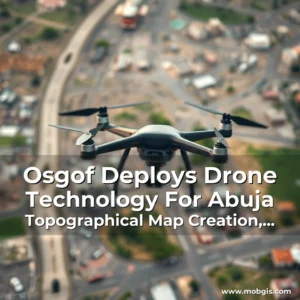
African nations employ drone-mounted multispectral cameras to combat locust swarms. Rapid aerial surveys guide pesticide application precisely, preserving non-target species and reducing chemical waste in ecological reserves.
Urban heat island effect analyses in Phoenix, Arizona, leverage thermal infrared imagery to redesign city layouts. Green corridors and reflective pavements reduce temperatures by up to 10°F, improving public health outcomes during summer months.
Bridging Gaps Between Academia and Industry
Academic institutions play a pivotal role in advancing remote sensing research, often partnering with private entities to develop commercial products. Universities offer courses covering photogrammetry, SAR processing, and UAV-based data collection methods relevant to MobGIS practitioners.
Collaborative platforms like GitHub host open-source libraries for processing remote sensing data, democratizing access to cutting-edge algorithms. Developers contribute modules for Python, R, and JavaScript, fostering innovation among hobbyists and professionals alike.
Professional associations such as ASPRS (American Society for Photogrammetry and Remote Sensing) organize conferences, workshops, and certification programs. These opportunities strengthen networking ties and encourage knowledge exchange across disciplines.
Internship programs connect students with industry leaders, providing hands-on experience in satellite telemetry, data fusion techniques, and geodetic corrections. Mentorship initiatives further support career development for emerging talents in this field.
Conclusion
Remote sensing continues to redefine how humanity interacts with geographic spaces, merging scientific rigor with practical utility. As technology evolves, its integration with MobGIS becomes increasingly vital for creating intelligent, responsive mapping solutions.
To stay competitive, MobGIS professionals should prioritize mastering remote sensing fundamentals alongside modern toolsets. Engaging with online forums, attending webinars, and experimenting with free APIs can accelerate proficiency in this transformative discipline.

news is a contributor at MobGIS. We are committed to providing well-researched, accurate, and valuable content to our readers.