
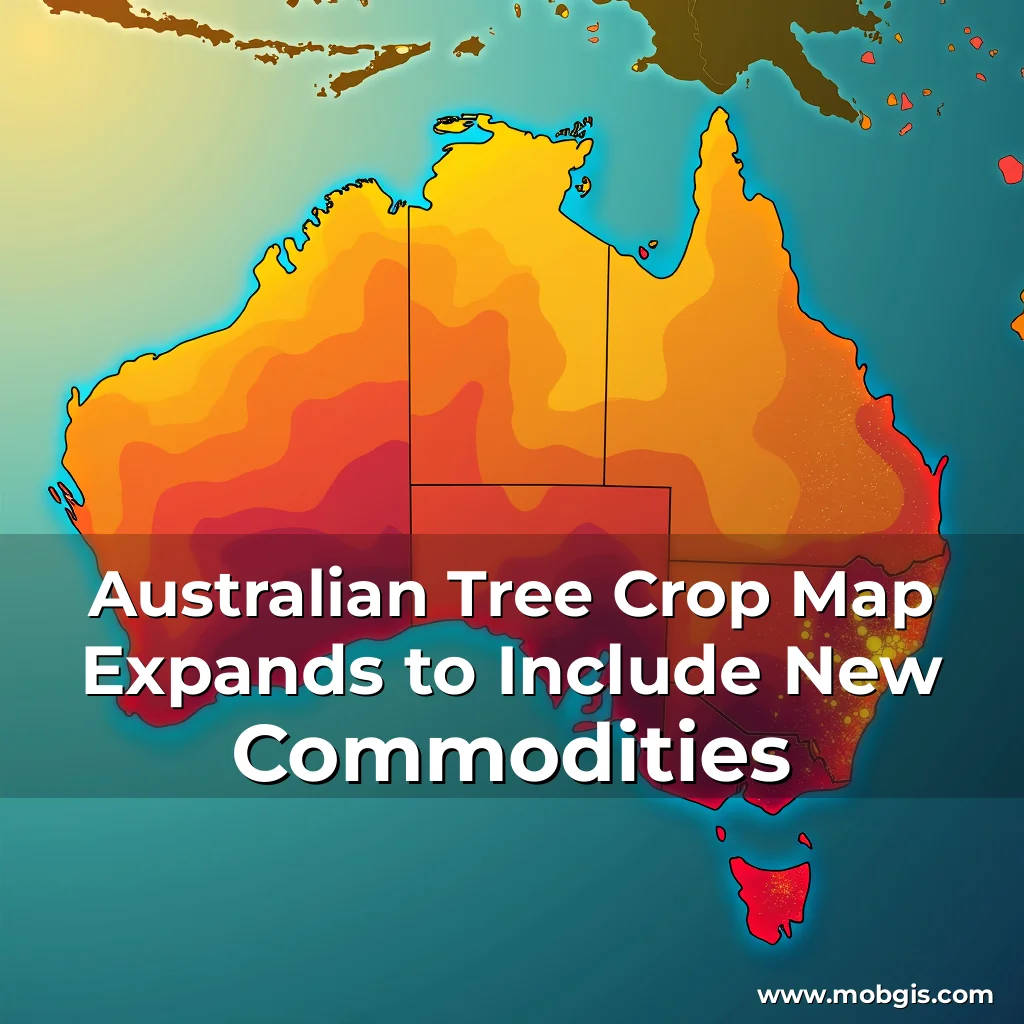
The Australian Tree Crop Map is a valuable resource for the country’s tree crop industries, providing essential data to safeguard against pests and diseases. The map, led by the University of New England’s Applied Agricultural Remote Sensing Centre (AARSC), has expanded to include new commodities, including apricot, cherry, dried fruit, lychee, nectarine, peach, and plum producers.
- Apricot
- Dried fruit
- Lychee
- Nectarine
- Peach
- Plum
The expansion aims to enhance the map’s capabilities, allowing first responders and authorities to quickly plan protection zones during pest and disease incursions. This will enable the industry to respond more effectively to emerging biosecurity threats. The map currently covers eight tree crop industries, including avocado, banana, citrus, macadamia, mango, olive, and truffle plantations. The new additions will bring the total number of tree crop industries to nine.
- Avocado
- Banana
- Citrus
- Macadamia
- Mango
- Olive
- Truffle
The University of New England’s AARSC, in partnership with Hort Innovation and Future Food Systems CRC, is leading the expansion of the map. The project is funded by Hort Innovation, with a total budget of $1.7 million. The Australian Tree Crop Map has proven its worth in the face of biosecurity challenges, such as the Varroa mite incursion. The map’s ability to quickly pinpoint areas of concern has been instrumental in managing biosecurity risks and equipping the industry with the timely data needed for an effective response.
“We have seen firsthand the impact of the Varroa mite incursion on the industry,” said Brett Fifield, CEO of Hort Innovation. “The Australian Tree Crop Map has been a game-changer in helping us manage these risks and respond to emerging threats.”
The new tool will provide apricot, cherry, dried fruit, lychee, nectarine, peach, and plum producers with vital data to manage production more effectively and stay ahead of potential biosecurity threats.
- Apricot producers will have access to data on pest and disease management
- Dried fruit producers will benefit from insights into market trends and supply chain management
- Lychee producers will be able to track the spread of disease and pests
- Nectarine producers will have access to data on yield forecasting and carbon storage
- Peach producers will benefit from insights into drought resilience and soil health
- Plum producers will have access to data on pest and disease management
The expansion of the Australian Tree Crop Map is a significant development for the country’s tree crop industries. It will enable the industry to respond more effectively to emerging biosecurity threats and mitigate their impact. The map is becoming a cornerstone for biosecurity monitoring, with the University of New England’s AARSC leading the way in developing and maintaining the map. “The Australian Tree Crop Map, created to Australian mapping standards and freely available for industry use, is rapidly advancing as a benchmark for industry-wide spatial data adoption,” said Dr. Craig Shephard, a senior researcher at the University of New England.
| Commodity | Benefits |
|---|---|
| Apricot | Pest and disease management, market trends, and supply chain management |
| Dried fruit | Market trends, supply chain management, and yield forecasting |
| Lychee | Disease and pest tracking, and yield forecasting |
| Nectarine | Yield forecasting, carbon storage, and drought resilience |
| Peach | Drought resilience, soil health, and pest and disease management |
| Plum | Pest and disease management, and yield forecasting |
The expansion of the Australian Tree Crop Map is expected to have a positive impact on the country’s tree crop industries, enabling them to respond more effectively to emerging biosecurity threats and mitigate their impact. With its ability to provide vital data to producers, the map is set to become an essential tool in the management of biosecurity risks.

news is a contributor at MobGIS. We are committed to providing well-researched, accurate, and valuable content to our readers.